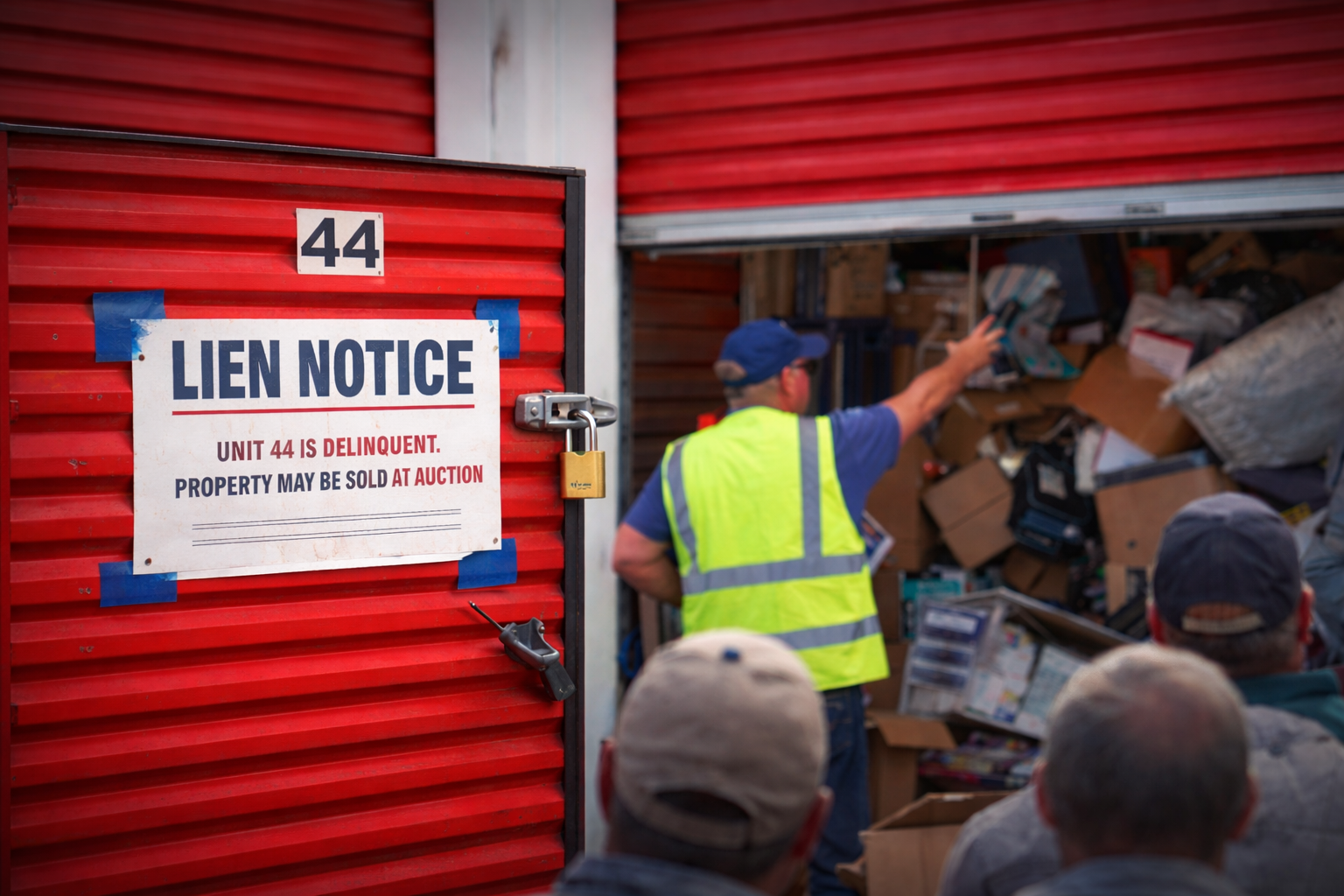
When people hear “storage auction,” they usually picture a fast, exciting treasure hunt. Reality is much less glamorous.
When people hear “storage auction,” they usually picture a fast, exciting treasure hunt. Reality is much less glamorous. Storage auctions exist for one reason: to recover unpaid rent on delinquent units after a legal process is followed. They’re not a fun side business for storage operators. In fact, most facilities would tell you the same thing: We don’t want to auction off anyone’s belongings. This guide explains why storage auctions exist, how they work, what most people get wrong about them, and why auctions are almost always the last option.
Storage Auctions Exist Because Storage Operators Have Legal Lien Rights
A storage facility is not like renting a home. It’s a business leasing space for stored property. When a customer stops paying rent, storage facilities can’t just open the unit and take what’s inside. They must follow state-specific lien laws and a strict timeline. Storage auctions exist because:
- the facility is owed rent
- the unit is occupied and can’t be rented to someone else
- the operator still has expenses (property taxes, utilities, staffing, security)
- the law provides a lien process to recover unpaid balances
The auction is the final step of enforcing that lien, but it only happens after proper notices and legal waiting periods.
The Big Myth: Storage Auctions Are “Extra Profit”
This is the biggest misunderstanding in the storage industry. People see TV shows and assume operators love auctions because they make money off abandoned units. That’s not how it works. Most storage auctions are not profitable for the business. If anything, they are damage control.
Why?
Because even if a unit sells, the facility still faces:
- unpaid rent that may never be fully recovered
- legal compliance costs
- staff time
- auction advertising requirements
- cleaning the unit afterward
- disposal costs for leftover trash
Most operators would rather keep a renter paying monthly than go through the auction process.
Why Storage Facilities Don’t Want Auctions
Here’s the honest truth: auctions are a hassle. They are:
1. Time-Consuming
Each unit requires documentation, timelines, notices, and coordination. Staff are pulled away from customer service, leasing, maintenance, and operations.
2. Paperwork-Heavy
Delinquency and lien processes have strict legal steps. A missed notice or incorrect timeline can create liability.
3. Legally Risky
Storage auctions are regulated by state lien laws. Mistakes can lead to disputes or lawsuits, especially if the tenant claims improper notice or mishandling.
4. Emotionally Charged
Even if the delinquency is long-term, the belongings inside may include personal items:
- family photos
- military memorabilia
- urns
- documents
- children’s keepsakes
Storage staff don’t enjoy seeing lives boxed up in a unit. Auctions are often uncomfortable and emotionally heavy.
5. Disruptive to Occupancy and Revenue
A delinquent unit is:
- not producing rent
- taking up rentable space
- increasing operational burden
Auctions don’t help the facility grow. They stall revenue and create extra work.
How Storage Auctions Actually Work
Here’s what typically happens when rent goes unpaid:
Step 1: Delinquency Begins
After a missed payment, a customer receives reminders and late fees.
Step 2: Lockout and Access Restriction
If the account remains unpaid, access is usually restricted.
Step 3: Legal Notice Period
Facilities are required to send notices within specific timelines. This may involve:
- mailed notices
- email notices
- public notice requirements (depending on state laws)
The goal is not punishment. It’s legal compliance and giving the tenant an opportunity to cure the delinquency.
Step 4: The Unit Becomes Eligible for Auction
Only after all legal requirements are met can the operator schedule an auction.
Step 5: Auction Sale and Unit Reset
After the auction, the unit must be:
- emptied
- cleaned
- inspected
- prepared for a new tenant
That’s the end of the process, and it’s a lot of labor for a facility to handle.
Why Auctions Are the Last Resort (Not the First)
A storage operator will always prefer a paying customer over an auction. Before an auction happens, facilities often try:
- payment reminders
- autopay setup
- a chance to catch up
- moving to a smaller unit
- helping the tenant exit without losing everything
If rent gets paid, the unit stays occupied, the customer keeps access, and the facility avoids legal headaches. It’s a win for everyone. Auctions only exist for the situations where the customer disappears, refuses to respond, or is unable to pay long-term.
What Customers Should Do If They’re Behind on Storage Rent
If you’re behind, do not avoid the facility. Silence is what escalates the situation. Instead:
- call and explain your situation
- ask about a payment plan
- ask if partial payment can stop lien progress
- downsize your unit to lower the monthly bill
- remove important items before the situation gets worse
Most facilities will work with you if you communicate early.
What Buyers Should Know Before Attending a Storage Auction
If you’re buying units at auction, you should know:
- you usually buy contents sight unseen
- the unit may contain mostly trash
- you may be responsible for removing everything
- you may encounter sensitive personal items
- laws and rules vary by state and by facility
Storage auctions are not a guaranteed “profit” opportunity. They’re a risk purchase and often a labor-heavy one.
Bottom Line: Storage Auctions Exist Because the Industry Needs a Legal Process
Storage auctions aren’t entertainment. They’re not extra income. They’re not something operators look forward to. They exist because storage facilities need a legal way to recover unpaid rent and reopen units for paying customers. Most operators would rather:
- keep the tenant,
- keep the unit occupied,
- avoid the auction entirely
But when all other options fail, auctions are the final step.
Listen to Modern Storage® Unpacked
Want more behind-the-scenes industry truths? Listen here: https://open.spotify.com/show/1eXmTMKzNBUng1ayinZudS
Follow Modern Storage® Unpacked
Spotify: https://open.spotify.com/show/1eXmTMKzNBUng1ayinZudS
Modern Storage® Website: https://modernstorage.com
TikTok: https://www.tiktok.com/@modernstorage
Instagram: https://www.instagram.com/modern.storage
Facebook: https://www.facebook.com/modernstorage