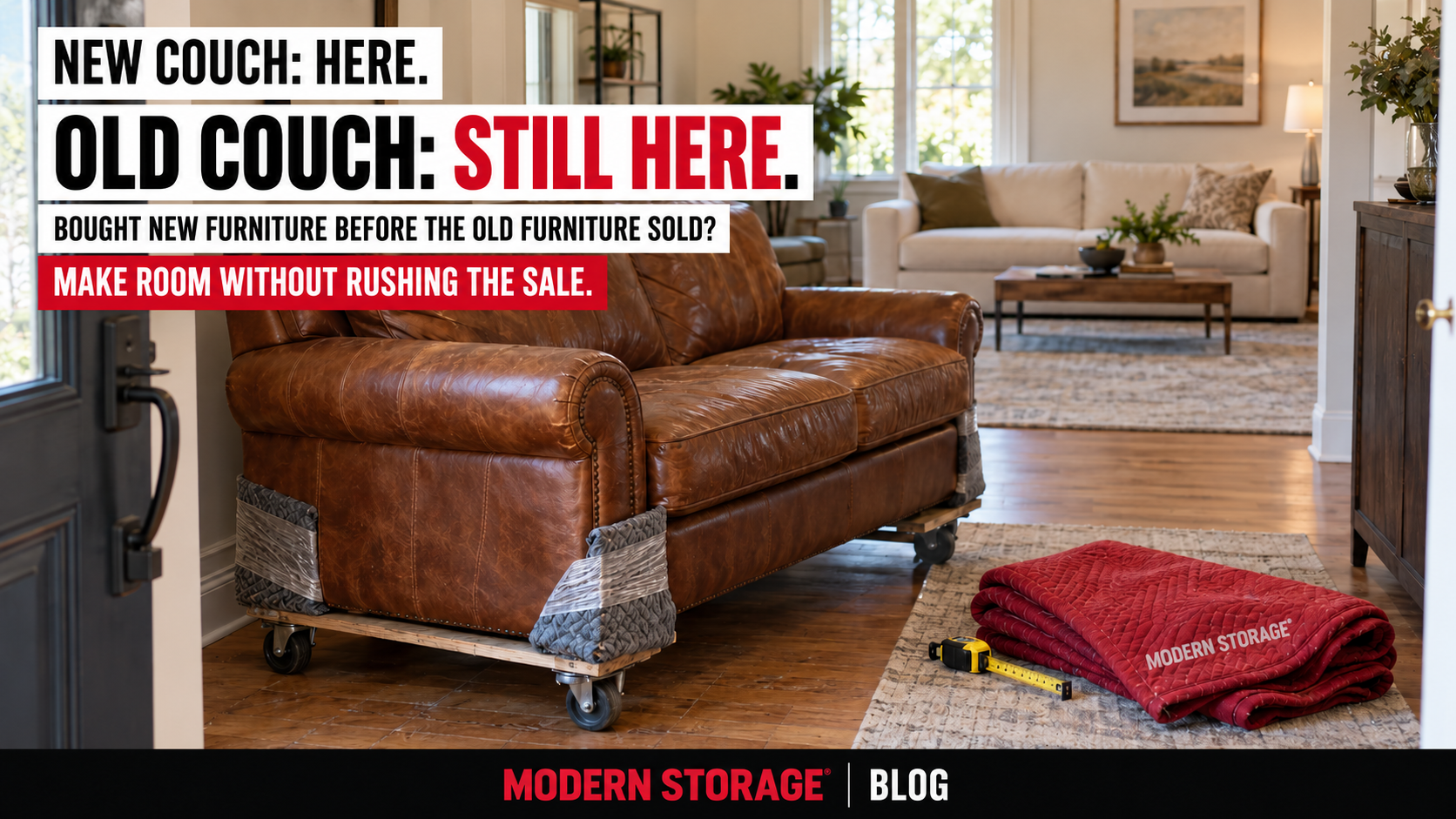
You found the new couch. It was on sale. It was exactly what you wanted. Delivery was available this week. There was just one tiny flaw in the plan: the old couch hasn't sold yet. Now your living room has enough seating for a small waiting room. Whether you're replacing a bedroom set, dining table, sectional, office furniture, or several rooms at once, buying new furniture before the old pieces are gone can create an awkward space problem. But that doesn't mean you have to accept the first low offer just to get the old furniture out of your house. Temporary self storage can give those extra pieces somewhere to go while you wait for the right buyer, decide what you're keeping, or figure out where the furniture is going next.
The New Couch Is Here. So Is the Old One.
Furniture purchases don't always happen in the perfect order. Maybe you found a deal you couldn't pass up. Maybe the exact piece you wanted finally came back in stock. Or maybe delivery happened much faster than you expected.
Whatever happened, you now own two versions of something when your home only has room for one.
For a few days, that's manageable. After a few weeks of walking around an extra sectional, dining table, or bedroom set, it starts feeling considerably less manageable.
Don't Panic-Sell Just to Get Your Room Back
When a large piece of furniture is taking up valuable living space, there's a temptation to drop the price until someone agrees to pick it up immediately.
Sometimes that's the right choice. But if the piece still has meaningful resale value, creating temporary space can give you more time to find a buyer without your crowded living room influencing every decision.
Decide Whether the Furniture Is Actually Worth Storing
Temporary storage is most useful when there's a reason you're holding onto the furniture. Maybe it's valuable, in excellent condition, already listed for sale, intended for a family member, or something you may use again.
Before moving it, decide which category the furniture falls into.
- Sell: Furniture that still has resale value
- Keep: Pieces you expect to use again
- Give to family or friends: Items that already have a future home
- Donate: Usable furniture you no longer want to sell
- Dispose or recycle appropriately: Furniture that is no longer usable
This keeps you from spending months storing something you already know you don't want.
Photograph It Before You Move It
If you plan to sell the furniture, take your listing photos before moving it into storage.
Furniture usually photographs better when it's assembled and staged inside a home than when it's surrounded by boxes. Take clear photos from several angles, photograph important details, record measurements, and document the condition.
Prepare Furniture for Storage
Don't move furniture directly from everyday use into storage without preparing it first. A little work now can make a difference when you're ready to sell, move, or use it again.
- Clean furniture before storing it
- Allow every surface and fabric to dry completely
- Remove personal belongings from drawers and compartments
- Follow manufacturer care instructions
- Protect delicate surfaces appropriately
- Keep cushions and removable pieces organized
- Avoid placing heavy objects on delicate furniture
- Record the condition before moving it
Disassemble What Makes Sense
Dining tables, bed frames, desks, shelving, and other furniture may take up significantly less space when appropriately disassembled.
Follow manufacturer instructions when taking furniture apart and place screws, bolts, and other hardware into labeled bags. Keep those parts with the furniture they belong to so you're not searching for four very specific screws when a buyer finally arrives.
Consider Climate Control for Certain Furniture
Depending on what you're storing, climate-controlled storage may be worth considering.
Climate-controlled storage provides a more consistent environment than a standard unit and may be helpful for certain wood, leather, upholstered, antique, or other furniture that can be sensitive to significant changes in temperature or humidity.
Climate control doesn't guarantee against damage, so furniture should still be clean, completely dry, appropriately protected, and stored according to manufacturer recommendations.
Make Selling From Storage Easier
If the goal is still to sell the furniture, don't bury it behind everything else you own.
Keep pieces you're actively selling reasonably accessible. Save your measurements and photos, and keep any removable hardware or pieces clearly labeled.
That way, when you finally get the message saying, 'Can I pick it up this weekend?' you aren't facing an archaeological excavation just to reach the dresser.
Know When It's Time to Change the Plan
Temporary furniture storage should have a purpose. If months pass without interest from buyers, take another look at your plan.
You might need better listing photos, a different price, a different selling platform, or a decision about whether donating the furniture makes more sense.
Compare what you're spending to keep the furniture with what it's realistically worth. The goal is to buy yourself time—not accidentally spend more storing the old couch than the old couch will ever sell for.
What If You're Replacing More Than One Room?
The space problem becomes even bigger when you're furnishing a new home, remodeling, combining households, or replacing several rooms at once.
Instead of squeezing old and new furniture into the same rooms, temporary storage can give you a staging area while you sell, donate, redistribute, or decide what stays.
Your Living Room Doesn't Need Two Living Rooms
Buying the replacement before selling the original isn't necessarily bad planning. Sometimes the right furniture becomes available before the old piece finds its buyer.
The important part is having a plan for the overlap so you don't spend the next month squeezing between two couches every time you walk across the room.
Final Thoughts
If the new furniture arrived before the old furniture left, you don't necessarily have to choose between living in a furniture showroom and accepting the first offer someone sends you.
Temporary storage can give you back your space while you wait for the right buyer, decide what to keep, or finish furnishing your home. With month-to-month rentals, Modern Storage® can give your extra furniture somewhere to go without turning a temporary space problem into a permanent one.
What should I do if my new furniture arrives before the old furniture sells?
If you don't have enough room for both, you can temporarily move the old furniture into self storage while you continue trying to sell it. This allows you to set up your new furniture without immediately accepting a lower offer just to clear the space.
Is it worth renting storage just for furniture?
It depends on the furniture's value, how much space it's taking up, and how long you expect to keep it. Temporary storage can make sense for higher-value pieces you expect to sell or furniture you know you want to keep but don't currently have room for.
How should I prepare furniture for storage?
Clean the furniture, allow it to dry completely, follow manufacturer care instructions, disassemble appropriate pieces when possible, keep hardware labeled, and protect surfaces with suitable materials.
Should I use climate-controlled storage for furniture?
Climate-controlled storage may be worth considering for certain wood, leather, upholstered, antique, or other furniture that can be sensitive to significant temperature and humidity changes. It provides a more consistent environment but does not guarantee against damage.
What if the furniture takes longer to sell than expected?
Modern Storage® offers month-to-month rentals, giving you flexibility if selling takes longer than planned. It can also be a good opportunity to reassess the price, listing, photos, or whether you still want to keep the piece.
Storage options, unit types, amenities, and availability vary by Modern Storage® facility. Follow manufacturer care recommendations for furniture and contact your facility with questions about specific storage needs.