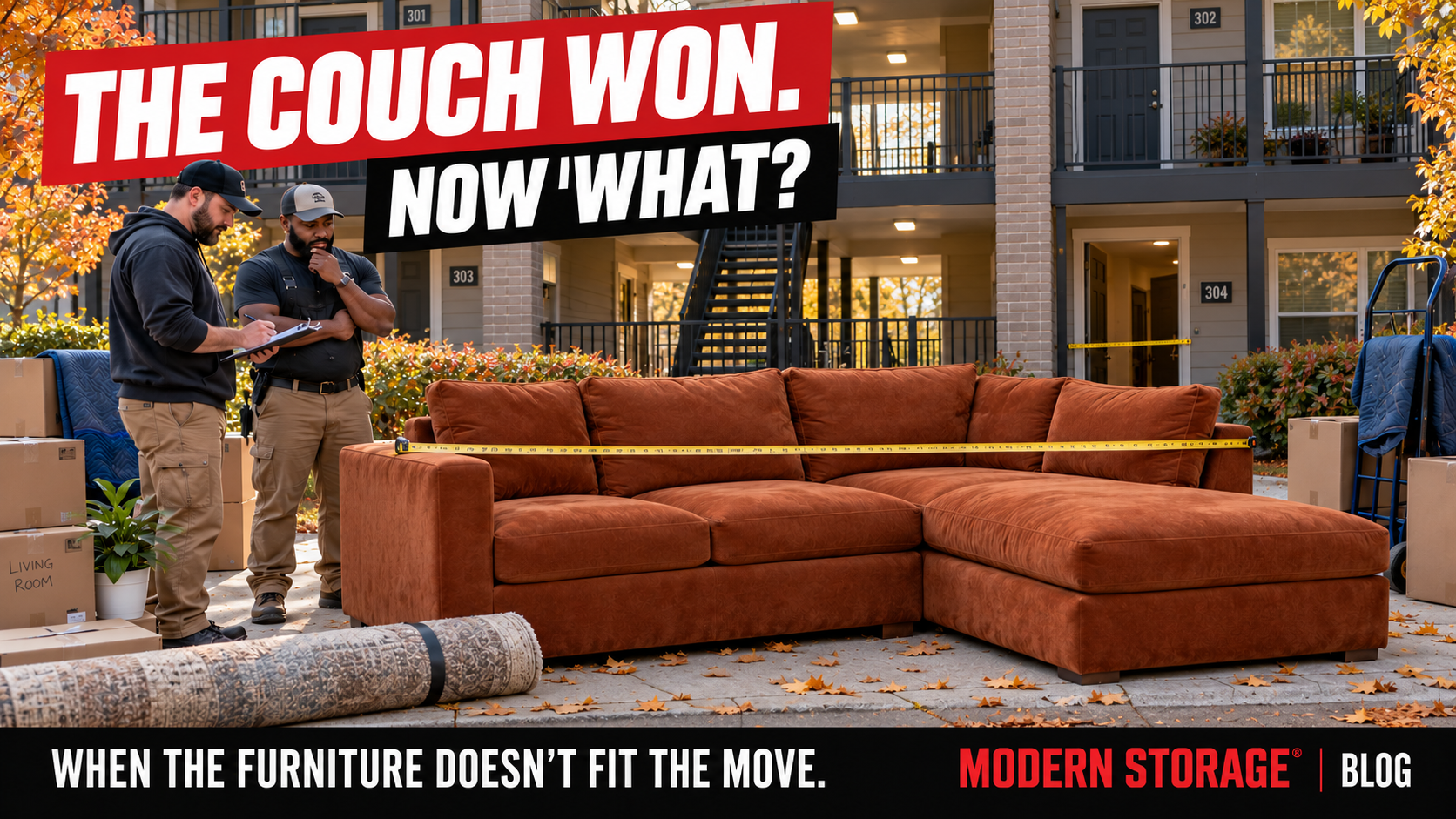
The couch looked perfect in your old living room. It looked perfect in the moving truck. And now it's halfway through the front door of your new place, someone is yelling "PIVOT!", and you're starting to realize you may have a problem. Furniture not fitting through a doorway, stairwell, elevator, or hallway is one of those moving problems you don't think about until you're standing there with a sofa wedged at a 45-degree angle. Before you start forcing it—or decide the couch now lives on the porch—there are a few things worth trying. And if the furniture truly isn't going to work in your new space, temporary self storage can give you somewhere to keep it while you decide whether to sell it, move it somewhere else, or find another solution.
First: Stop Pushing
If the couch has stopped moving but everyone carrying it is still pushing harder, that's your sign to stop.
Forcing oversized furniture through a tight opening can damage the couch, door frame, walls, flooring, or the people attempting to move it. Back up, put the furniture somewhere stable, and figure out exactly where the problem is.
Measure the Couch—and Everything Between It and the Living Room
You need more than the width of the front door. Measure the couch and the entire route it needs to travel.
- Couch width
- Couch height
- Couch depth
- Relevant diagonal measurements
- Exterior doorway
- Interior doorways
- Hallway width
- Ceiling height in tight areas
- Stairwell width and height
- Landings
- Elevator dimensions
- Tight corners and turns
A couch may technically fit through the front door and still be impossible to maneuver around the corner immediately behind it.
Try a Different Angle
Large furniture doesn't always need to move through a doorway in the same orientation it normally sits.
Depending on the design, carefully turning or tilting the couch may provide additional clearance. Some sofas can pass through an opening more easily when positioned vertically or at an angle.
Don't attempt unsafe lifting or balancing just to make the furniture fit. If the piece is too heavy or awkward to control, get additional help or contact professional movers.
Remove What Can Safely Come Off
A couple of inches can make a huge difference.
Check whether the couch has removable feet, legs, cushions, or other components. Some furniture is specifically designed to be partially disassembled for transportation.
Follow manufacturer instructions rather than taking apart structural components on your own. Put screws, bolts, feet, and other hardware into a labeled bag and keep everything with the couch.
Look for Another Way In
The front door may not be your only option.
Depending on the home, another appropriate entrance may provide a wider or straighter path. Before attempting another route, measure it completely and make sure the path can be used safely.
Avoid improvised methods that could damage the home, furniture, or create a safety risk.
Know When to Call a Professional
There is a point where getting the couch inside stops being a moving-day puzzle and starts becoming a job for someone who does this professionally.
Professional movers may have experience maneuvering oversized furniture, safely removing certain components, protecting door frames and walls, and determining whether a piece can realistically reach the intended room.
If the couch is expensive, extremely heavy, antique, unusually shaped, or simply beyond what you can safely handle, getting professional help may be worth it.
What If It Truly Doesn't Fit?
Sometimes the answer really is no.
The couch may have fit perfectly in your previous home but simply isn't compatible with the layout of the new one. That doesn't mean you have to decide its fate while the moving truck is still in the driveway.
Your options may include selling it, giving it to a friend or family member, donating it, using it somewhere else, or temporarily storing it while you decide.
Don't Panic-Sell the Couch From the Driveway
Discovering that a large piece of furniture won't fit can create pressure to get rid of it immediately.
If the couch is still valuable and you plan to sell it, being forced to find a same-day buyer isn't exactly an ideal negotiating position.
Temporary storage can give you time to take good photos, create a listing, determine a reasonable price, and wait for a buyer without keeping the couch in the middle of your moving process.
Store It While You Figure It Out
If you aren't ready to make a permanent decision, self storage can act as the middle step.
Before storing a couch, make sure it is clean and completely dry. Follow manufacturer care recommendations, protect it with appropriate breathable materials when needed, and avoid placing heavy objects on cushions or upholstered surfaces.
Climate-controlled storage may also be worth considering for certain upholstered, leather, antique, or other furniture that can be sensitive to significant temperature and humidity changes. Climate control provides a more consistent environment but does not guarantee against damage.
Measure Before the Next Furniture Purchase
The couch that didn't fit can teach one extremely useful lesson: measure the path, not just the room.
Before buying replacement furniture, record the dimensions of your exterior doors, hallways, stairways, elevators, interior doors, and any tight turns leading to the room.
A 100-inch sofa may look fantastic on the living room floor plan. That doesn't help if there's a 90-degree hallway turn standing between the sofa and the living room.
And Yes, Someone Will Probably Say 'Pivot'
Moving oversized furniture has a way of turning perfectly reasonable adults into a team of people shouting completely different instructions at each other.
Measure first, communicate clearly, don't force the furniture, and know when the couch has officially won.
Final Thoughts
A couch that won't fit through the door is frustrating, but it doesn't require an immediate permanent decision.
Measure the route, safely remove appropriate components, try another reasonable approach, and bring in professional help when necessary. If the furniture simply doesn't work in the new space, Modern Storage® can give it a temporary home while you decide what happens next.
What should I do if my couch won't fit through the door?
Stop and measure before continuing. Check the couch's height, width, depth, and diagonal measurements against the doorway and the entire path into the room. Removing detachable components or changing the couch's orientation may provide additional clearance.
Can removing the couch legs help?
Sometimes. If the legs or feet are designed to be removed, doing so may provide the extra clearance you need. Follow manufacturer instructions and keep all hardware labeled.
What if the couch fits through the door but not around the hallway?
The entire route matters—not just the front door. Tight turns, stairwells, ceilings, railings, elevators, and interior doorways can prevent furniture from reaching the intended room even if it fits through the entrance.
Should I hire professional movers if the couch won't fit?
If the furniture is valuable, extremely heavy, difficult to maneuver, or requires specialized disassembly, professional movers may be the safer option. Avoid damaging the furniture, home, or yourself by forcing something through a space where it clearly doesn't fit.
Can I temporarily store a couch if it won't fit in my new home?
Yes. If you need time to sell it, give it to someone, or decide what to do next, self storage can provide a temporary place for the couch. Modern Storage® offers month-to-month rentals, which can be useful for short-term situations.
Storage options, unit types, amenities, and availability vary by Modern Storage® facility. Follow manufacturer instructions when disassembling or moving furniture, and use professional movers when appropriate.