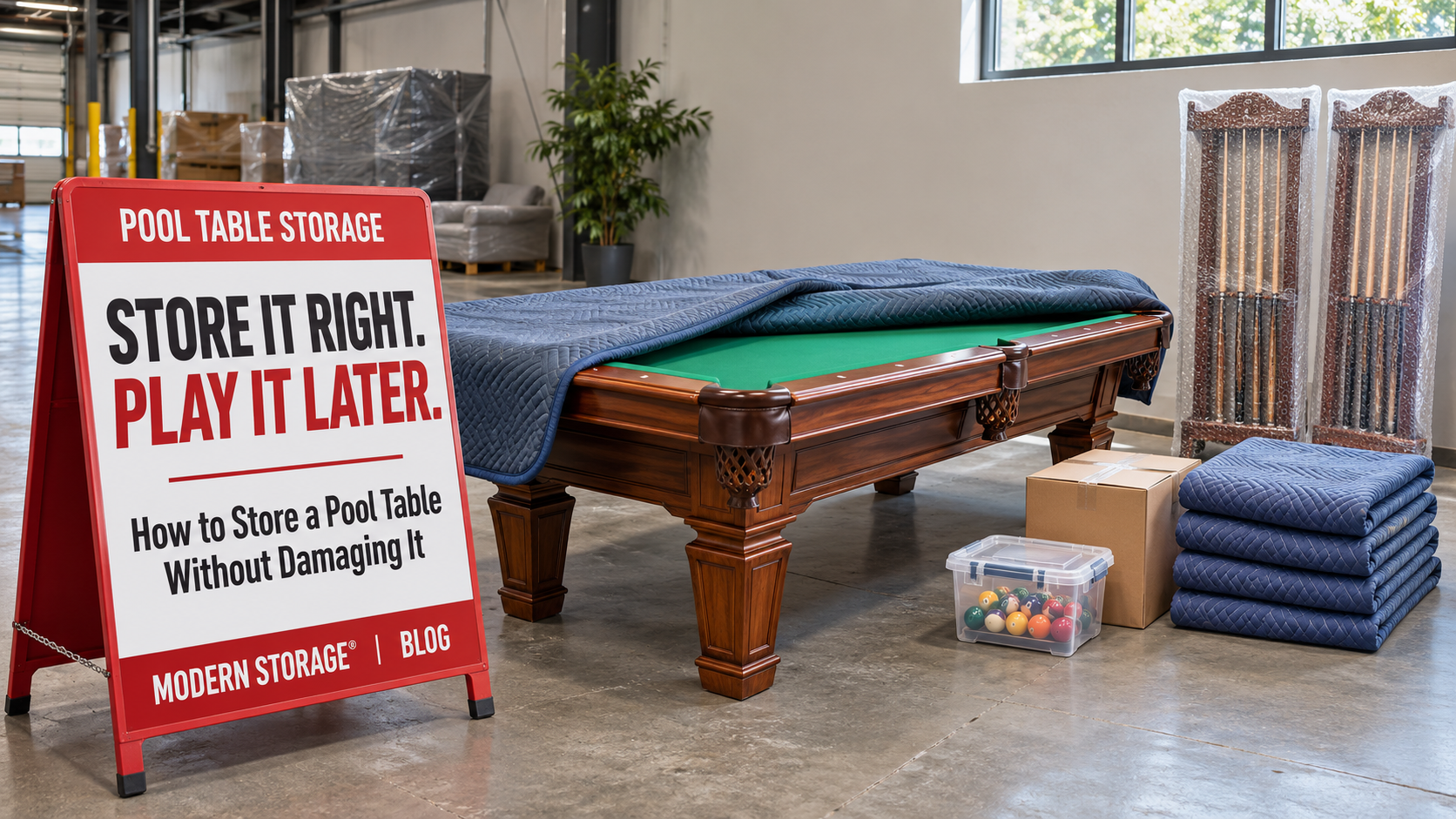
There's something about having a pool table at home that makes any room a little more fun. Maybe it's where your family gathers on weekends, where friends challenge each other to a game, or where you've spent years perfecting a trick shot that still only works about half the time. A pool table can bring a lot of great memories into a home. But what happens when it's time to move? Maybe you're remodeling the game room, moving into a new house, downsizing for a while, or simply making room for something different. Whatever the reason, you've got one pretty big question: How in the world do you store a pool table without damaging it? After all, it's not exactly something you can fold up and slide into a closet. Pool tables are heavy, carefully constructed, and made with materials that need a little extra attention. From the felt and wooden frame to the slate playing surface, every part deserves proper care during moving and storage. The good news? With the right preparation, you can help protect your pool table while it's not being used. Whether you're storing it for a few months or planning to keep it until your next game room is ready, Modern Storage® is here to help you explore your storage options. Let's walk through what you need to know before moving that first piece.
A Pool Table Is More Than Just Another Piece of Furniture
If you've ever helped move a pool table, you already know there's a little more involved than carrying a couch through the front door.
Pool tables are carefully built to provide a smooth, level playing surface. Even small changes to the frame, slate, or leveling components can affect how the table plays.
Many traditional tables use heavy slate sections beneath the cloth, along with wooden frames, rails, pockets, and specialized hardware.
That's why moving and storing a pool table takes a little more planning than storing everyday household furniture.
Whether you're preparing for a move, remodeling a room, or keeping your table until you have space for it again, taking the time to prepare everything properly can help prevent unnecessary damage.
Step 1: Know What Kind of Pool Table You Have
Before you begin, it's helpful to know how your pool table is constructed.
Traditional pool tables often feature slate playing surfaces, while some smaller or recreational tables use alternative materials.
Slate tables are especially heavy and generally require professional handling. Some have a single slate piece, while others use multiple sections that must be carefully separated and reassembled.
The table's construction will determine how it should be taken apart, moved, supported, and stored.
If you still have the owner's manual, now is a great time to look through it. If not, a qualified pool table technician may be able to help identify the table and recommend the proper process.
Step 2: Make a Plan Before Moving Anything
A little planning can make moving day much smoother.
Start by measuring your table and checking the path it will need to travel. Doorways, staircases, narrow hallways, and tight corners can all make moving large components more challenging.
You'll also want to know where each component will go once the table is disassembled.
- Measure the pool table and its largest individual components
- Check doorways, hallways, and staircases
- Review the manufacturer's disassembly instructions
- Arrange professional assistance for heavy slate components
- Prepare appropriate protective packing materials
- Choose a storage space with suitable dimensions and access
And here's a helpful tip: take photographs before anything comes apart. Those pictures may come in handy when it's time to put the table back together.
Step 3: Carefully Disassemble Your Pool Table
For most traditional slate pool tables, disassembly is an important part of preparing for storage.
Depending on the design, the process may involve removing pockets, rails, playing cloth, slate sections, and parts of the supporting frame.
However, the exact sequence varies by manufacturer and table model.
Because slate is extremely heavy and can crack or cause serious injury if handled incorrectly, professional disassembly is strongly recommended.
A qualified technician can help protect the table's components while preparing them for transport.
This is one of those projects where having someone experienced handle the heavy lifting is well worth considering.
Step 4: Protect the Felt and Playing Surface
The cloth covering your pool table plays an important role in how smoothly the balls roll.
It also needs special attention when the table is disassembled.
Depending on how the cloth was installed, removing it may involve staples or adhesive. Improper removal can stretch, tear, or otherwise damage the material.
If the cloth can be reused, a qualified technician can advise how it should be removed, handled, and stored.
Some tables may require new cloth during reassembly, so it's helpful to discuss that possibility before moving day.
Any cloth being stored should be clean, completely dry, and protected from dirt, moisture, and unnecessary handling.
Step 5: Handle the Slate With Extra Care
Let's talk about the heaviest part of the entire project: the slate.
Slate provides the solid, smooth surface that makes traditional pool tables play the way they do.
It's incredibly heavy, and while it's strong under the right conditions, it can chip or crack if handled or supported incorrectly.
Each slate piece should be moved using appropriate professional equipment and supported according to the manufacturer's recommendations.
Avoid assuming that slate can simply be leaned against a wall or stacked on the floor. Improper positioning can create tipping hazards or place damaging pressure on the stone.
If you're unsure how to position the slate in storage, ask the technician handling the disassembly for a specific support and storage plan.
Step 6: Wrap and Protect the Wooden Components
Your pool table's wooden frame, rails, and legs deserve just as much attention as the playing surface.
Wood can be scratched or dented during moving, and certain finishes may be sensitive to moisture or prolonged contact with unsuitable wrapping materials.
Use clean, breathable protective materials where appropriate, and add padding around corners and decorative details.
Avoid wrapping wood tightly in plastic for extended periods if doing so could trap moisture against the finish.
Keep components separated and supported so heavy pieces aren't resting directly against delicate surfaces.
A little extra protection now can help keep the table looking beautiful when it's time to bring it home.
Step 7: Keep the Smaller Parts Together
Once the large pieces are taken care of, don't forget about the smaller components.
Bolts, screws, brackets, pockets, and other hardware may not take up much room, but they're important when it's time to reassemble the table.
Place hardware in clearly labeled bags or containers, keeping parts grouped according to where they belong.
You can also photograph the components and label the bags to match your pictures.
Keep accessories such as pool balls, cues, racks, and brushes organized separately and protected from unnecessary pressure.
When everything has its place, getting the table set up again becomes a much easier process.
Step 8: Choose the Right Storage Environment
Now that your pool table is prepared, it's time to think about where it will stay.
Pool tables contain materials that can respond differently to changing environmental conditions, including wood, cloth, adhesives, and sometimes leather.
Climate-controlled storage may be worth considering because it typically offers more consistent temperatures than a standard outdoor-access unit.
However, climate control does not eliminate every environmental risk or guarantee the condition of stored belongings.
The most suitable environment will depend on the table's construction, manufacturer recommendations, and how long it will be stored.
Modern Storage® offers climate-controlled options at select facilities. Contact your preferred location to discuss availability and dimensions.
Step 9: Arrange Everything Carefully in Storage
Once you've selected a unit, take a few minutes to plan how the components will fit inside.
The goal is to keep everything properly supported, protected, and accessible without putting unnecessary pressure on any part of the table.
- Follow technician instructions for positioning and supporting slate
- Keep heavy components stable and protected from accidental movement
- Use suitable padding between wooden pieces
- Keep labeled hardware and accessories together
- Avoid placing heavy boxes on rails, cloth, or decorative components
- Leave enough room to handle and retrieve components safely
- Keep items away from moisture and other potential hazards
Don't forget to check the unit's door opening and any hallway or elevator dimensions before move-in day.
A little planning helps make both storage and eventual removal much more manageable.
Step 10: Getting Your Pool Table Ready to Play Again
Eventually, the day will come when your pool table is ready for its new home.
Maybe the game room renovation is complete. Maybe you've moved into a new house. Or maybe you've finally found the perfect spot for family game nights.
Whatever the occasion, getting your pool table back together deserves the same care as taking it apart.
Professional reassembly is especially important for slate tables because the playing surface needs to be correctly supported, aligned, leveled, and finished.
A technician can also assess whether the original cloth can be reused or should be replaced.
Once everything is properly assembled and leveled, you can get back to what you really enjoy: playing pool.
How Modern Storage® Can Help
Whether you're moving, remodeling, or simply making room at home, Modern Storage® offers storage options for a variety of household needs.
With different unit sizes and month-to-month rentals, you can explore storage space that fits your plans without committing to an annual lease.
For a pool table, it's especially important to confirm that the unit can safely accommodate the dimensions and weight of all components.
Our team can help you compare available unit sizes, discuss access arrangements, and explore climate-controlled options where offered.
Just remember that pool table disassembly, moving, slate support, and reassembly should be handled according to manufacturer recommendations and by qualified professionals when appropriate.
We're happy to help with the storage side while you make plans for your next game room.
Final Thoughts
A pool table is more than just a piece of furniture.
It's family game nights, friendly competition, laughter with friends, and the occasional shot that somehow goes exactly where you meant it to.
If you need to store yours for a while, a little preparation can go a long way toward protecting it.
Take the time to plan the move, protect each component, choose an appropriate storage environment, and arrange for professional help when needed.
Modern Storage® is here to help you explore storage options while your table waits for its next home.
And when it's finally time to play again, we hope the only thing you have to worry about is who's breaking first.
Can you store a pool table without taking it apart?
Some smaller or specially designed pool tables may be stored assembled, but most traditional slate pool tables should be professionally disassembled before moving. Attempting to move a heavy slate table in one piece can damage the frame, slate, or leveling components.
Should a pool table be stored in climate-controlled storage?
Climate-controlled storage is generally a good option to consider for pool tables, especially those with wooden frames and playing cloth. More consistent environmental conditions can help reduce exposure to extreme temperature fluctuations, although preservation is not guaranteed.
Can pool table slate be stored standing up?
Slate positioning depends on the manufacturer's instructions and the type of slate. Improper vertical storage can create a serious tipping hazard, while incorrect flat storage can leave slate inadequately supported. Ask a qualified pool table technician how each piece should be supported and secured.
How do you protect pool table felt during storage?
If the cloth is removed, it should be handled carefully, kept clean and dry, and stored according to the manufacturer's or technician's recommendations. Some cloth may not be suitable for reuse after removal, particularly if it was glued or stretched during installation.
What size storage unit do I need for a pool table?
That depends on the table's dimensions and whether it's disassembled. A 10x10 or larger unit may be worth considering for some disassembled tables, but you should measure every component, account for safe slate support and handling space, and confirm the unit's door dimensions before renting.
Pool tables vary in construction, size, weight, and disassembly requirements. Always follow manufacturer instructions and consider hiring a qualified pool table technician for disassembly, moving, and reassembly, particularly for slate tables. Storage unit sizes, climate-control options, and availability vary by Modern Storage® location. Climate-controlled storage does not guarantee preservation or prevent all damage.