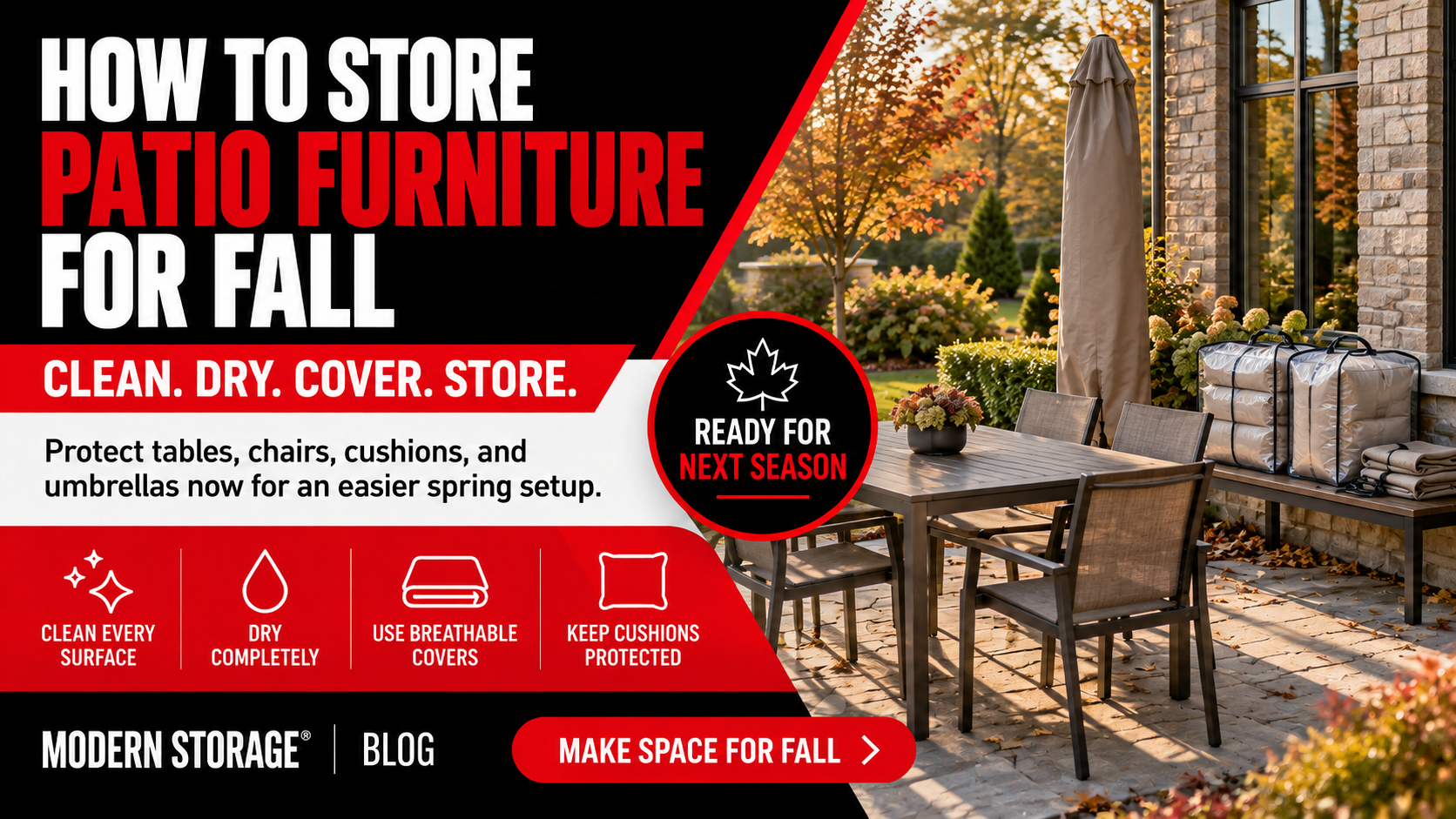
As summer winds down and cooler weather moves in, your patio may not get nearly as much use—but that doesn't mean your outdoor furniture should be forgotten until spring. Months of exposure to changing temperatures, moisture, dirt, and debris can be tough on furniture, cushions, and outdoor décor. Taking a little time to clean, protect, and properly store your patio furniture for fall can help keep seasonal belongings organized while freeing up valuable space at home.
Why Store Patio Furniture for Fall?
Outdoor furniture is designed to spend time outside, but that doesn't mean every table, chair, cushion, or piece of décor needs to stay exposed year-round. When patio season slows down, moving seasonal belongings into storage can help reduce unnecessary exposure while freeing up your patio, garage, or shed.
The key is not simply moving everything into a storage unit. A little preparation before storage can make a major difference when you're ready to use everything again.
1. Clean Everything Before You Store It
Start by removing leaves, dirt, pollen, dust, and other debris from tables, chairs, cushions, and accessories. Clean each piece according to the manufacturer's care instructions, paying attention to the specific material.
Don't forget the areas that are easy to overlook, including underneath tabletops, around chair legs, inside furniture frames, and beneath removable cushions.
2. Make Sure Everything Is Completely Dry
This may be the most important step. Never rush freshly cleaned or damp outdoor furniture directly into storage. Moisture trapped in cushions, fabrics, furniture joints, or storage containers can contribute to mildew, odors, and other problems.
Give everything enough time to air-dry completely before packing, covering, or moving it into your unit.
3. Protect Furniture Based on the Material
Patio furniture isn't one-size-fits-all when it comes to storage. Wood, metal, wicker, plastic, and mixed-material furniture may require different preparation, so follow the manufacturer's recommendations whenever possible.
- WOOD: Clean and dry thoroughly, and consider a manufacturer-recommended protective finish when appropriate.
- METAL: Check for scratches, chipped finishes, or early signs of rust before storage.
- WICKER: Gently remove dirt and debris from woven areas and make sure the material is completely dry.
- PLASTIC: Clean thoroughly and avoid stacking or placing heavy items in ways that could warp or damage pieces.
- MIXED MATERIALS: Follow care recommendations for each material used in the furniture.
4. Don't Forget the Cushions
Outdoor cushions may need even more attention than the furniture itself. Clean them according to their care instructions and allow the fabric and interior filling to dry completely.
Once dry, keep cushions organized in clean, dry containers or appropriate storage bags. Avoid compressing them under heavy furniture or boxes, which could affect their shape.
5. Consider Climate-Controlled Storage
Your garage or shed may be convenient, but it can still experience significant changes in temperature and humidity. For patio furniture, cushions, outdoor décor, and other belongings that may be sensitive to those changes, climate-controlled storage can provide a more consistent environment.
Climate-controlled storage can also help solve a more practical problem: space. Instead of filling the garage with patio furniture for months, you can use that space for the things you actually need during the season.
6. Disassemble and Organize When It Makes Sense
If your patio table, sectional, umbrella, or other furniture can be safely disassembled according to the manufacturer's instructions, doing so may help you use your storage space more efficiently.
Keep screws, bolts, brackets, and other hardware together in clearly labeled bags. Attach the bag to the corresponding furniture when appropriate or place all hardware in one labeled container so small pieces don't disappear over the winter.
7. Set Yourself Up for an Easier Spring
Think about move-out while you're organizing the unit. Keep patio furniture and seasonal outdoor belongings grouped together rather than burying them behind items you won't need for much longer.
Label containers clearly, keep related pieces together, and make a quick inventory of what you've stored. When the first warm weekend arrives, you'll know exactly where everything is.
Don't Stop With the Furniture
Fall is also a good opportunity to rotate other seasonal belongings. Patio umbrellas, outdoor rugs, empty planters, summer décor, recreational equipment, and other permitted warm-weather items can move into storage along with your furniture, creating more usable space at home during the cooler months.
Final Thoughts
A little work at the end of patio season can save you time when warm weather returns. Clean everything, let it dry completely, protect each material appropriately, organize small parts, and choose a storage environment that makes sense for what you're keeping. Modern Storage® offers convenient storage options that can help you clear seasonal clutter, organize outdoor belongings, and make room at home until it's time to enjoy the patio again.
Should you clean patio furniture before putting it in storage?
Yes. Remove dirt, pollen, leaves, and other debris and clean each piece according to the manufacturer's recommendations. Everything should be completely dry before storage to help reduce the chance of mildew and unwanted odors.
How should patio cushions be stored?
Clean cushions according to their care instructions and allow them to dry completely. Store them in clean, dry containers or appropriate storage bags, and avoid putting away cushions while they're damp.
Should you cover patio furniture in a storage unit?
A breathable protective furniture cover may be appropriate for certain pieces. Avoid trapping moisture underneath plastic or other non-breathable materials, and always consider the manufacturer's storage recommendations for the specific furniture material.
Is climate-controlled storage good for patio furniture?
Climate-controlled storage can be worth considering for furniture, cushions, décor, and other items that may be sensitive to significant temperature or humidity changes. It provides a more consistent environment than many garages, sheds, or outdoor areas.
What else can I store with my patio furniture for the season?
You can organize other permitted seasonal outdoor belongings alongside your furniture, such as patio cushions, outdoor décor, empty planters, umbrellas, clean outdoor rugs, and recreational items you won't regularly use during the cooler months.
Climate-controlled storage and unit types vary by Modern Storage® facility. Climate control can provide a more consistent storage environment but does not guarantee against damage. Always follow manufacturer recommendations when cleaning, treating, disassembling, or storing furniture.