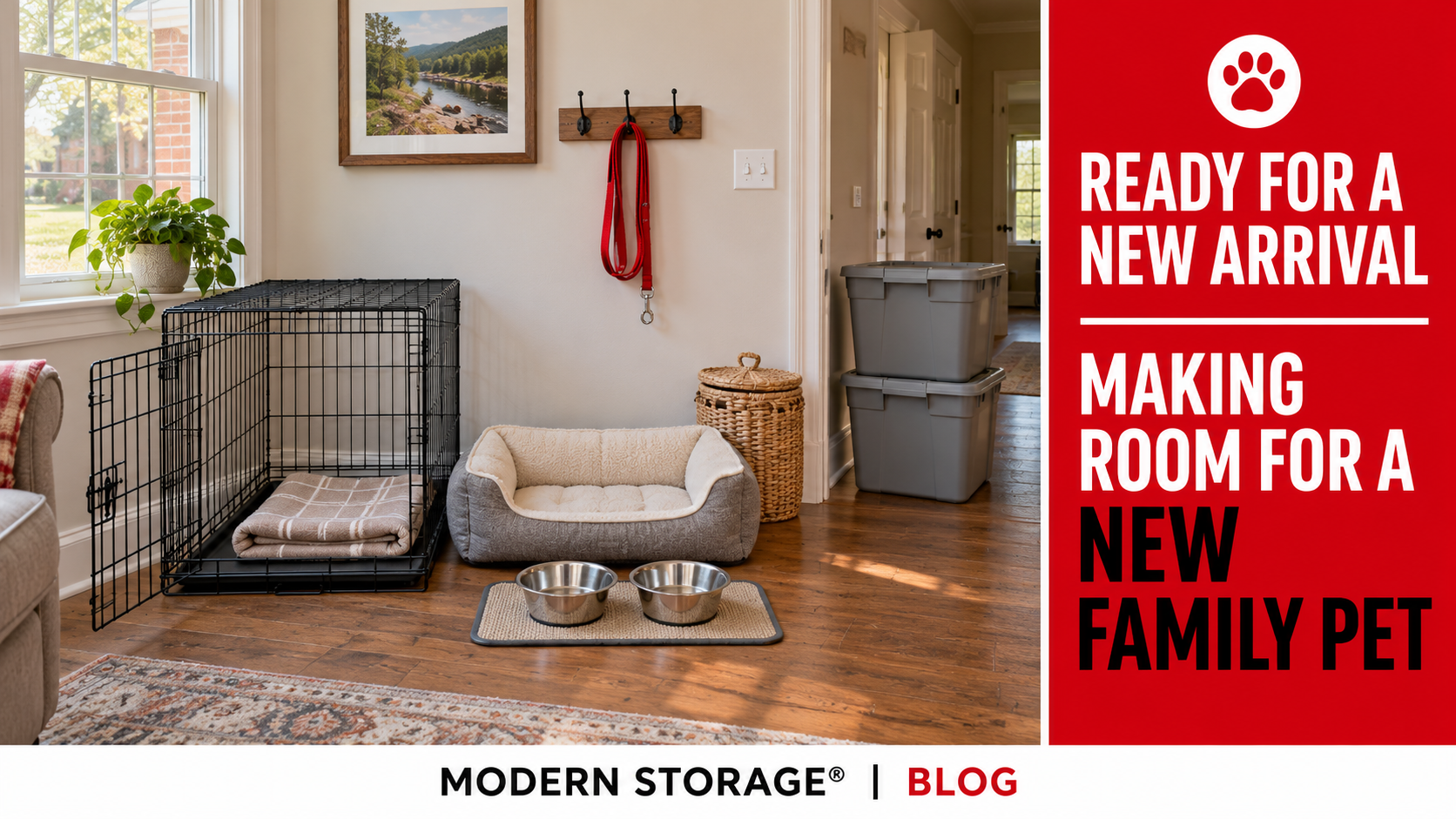
There's something so exciting about bringing a new pet home. Maybe it's a puppy with oversized paws and more energy than you know what to do with. Maybe it's a curious kitten who's already decided the entire house belongs to them. Or maybe it's an older rescue pet who's finally getting a comfortable place to call home. Whatever your newest family member looks like, one thing is certain: life at home is about to get a little more interesting. Before your new pet arrives, though, it's worth taking a little time to prepare—not because your home needs to be perfect, but because having a comfortable, safe space ready can make those first few days easier for everyone. At Modern Storage®, we know that homes change as families grow. Sometimes that means welcoming a new baby, moving into a new place, or bringing home a four-legged family member. So whether you're preparing for your very first pet or adding another furry friend to the family, here are a few simple ways to get your home ready for the exciting days ahead.
A New Pet Means a New Chapter at Home
Bringing home a new pet is one of those exciting moments that can change the feeling of an entire household.
Suddenly, there's someone new to greet you at the door, follow you from room to room, or curl up beside you on the couch.
Of course, there's also a little adjustment involved.
Your normal routine might change. You'll need space for food, toys, bedding, and other supplies. And depending on your pet's age and personality, there may be a few surprises along the way.
But preparing your home doesn't have to be overwhelming.
A few thoughtful changes can help create a safe, welcoming environment where your newest family member can begin settling in.
And before long, it might be hard to imagine your home without them.
1. Find the Perfect Spot for Their First Bed
Before your new pet arrives, think about where they'll have a comfortable place to rest.
For a puppy, that might mean a soft dog bed in a quiet corner or a properly introduced crate that serves as a safe resting space.
For a kitten, it might be a cozy bed, a quiet room, or a safe spot where they can retreat when everything feels unfamiliar.
Try choosing a location away from heavy foot traffic, loud appliances, and other distractions.
And remember that some pets will have their own opinions about where they want to sleep.
You might purchase the nicest pet bed you can find, only to discover that your new kitten prefers the cardboard box it came in.
Sometimes that's just part of being a pet owner!
2. Get the Essentials Ready Before They Arrive
A little preparation can make your new pet's first day at home much smoother.
Start by gathering the supplies appropriate for your pet's species, age, and needs.
- Appropriate food recommended for your pet's age and needs
- Food and water bowls
- A comfortable bed or designated resting area
- Safe, age-appropriate toys
- A collar, harness, leash, or carrier as appropriate
- Cleanup supplies for accidents and everyday messes
- A litter box and scratching surface for cats
- A crate, playpen, or other safe containment option when appropriate
- Grooming supplies suited to your pet
- Veterinary records, identification information, and emergency contact details
You don't have to buy every pet product on the market.
Start with the basics and add other items as you learn what your pet actually enjoys and needs.
And if you're adopting from a shelter or rescue organization, ask whether they can share information about the food, routines, and supplies your pet is already familiar with.
3. Take a Pet's-Eye View of Your Home
One of the most important steps in preparing for a new pet is looking around your home from their perspective.
That curious puppy or kitten is going to notice things you probably haven't thought about in years.
Electrical cords, loose shoestrings, small toys, houseplants, and items tucked underneath furniture can suddenly become very interesting.
Before bringing your pet home, take a walk through the areas they'll be able to access.
- Secure electrical cords and charging cables
- Store medications, cleaning products, and chemicals out of reach
- Remove toxic plants or place them somewhere completely inaccessible
- Pick up small objects that could become choking or swallowing hazards
- Secure trash cans and food that may be harmful to animals
- Check doors, windows, gates, and fencing for potential escape routes
- Move fragile or valuable belongings away from areas where pets will play
- Keep dangerous foods such as chocolate, grapes, raisins, and xylitol-containing products away from dogs
Pet-proofing is especially important for young animals that are still learning about their surroundings.
A little extra preparation now can help prevent stressful situations later.
4. Make Room for Toys, Treats, and All the Extras
It's amazing how quickly one little pet can accumulate belongings.
One day you're bringing home a puppy with a leash and a food bowl. The next, there's a basket full of toys, three different chew bones, grooming supplies, and a collection of treats.
And somehow, the favorite toy is usually the one that's missing.
Creating a few designated spaces for pet supplies can help keep everything organized.
Try keeping leashes and harnesses near the door, storing toys in an accessible basket, and organizing grooming supplies in a cabinet.
Keep treats and food in secure containers according to product instructions, away from children and pets who might help themselves.
You don't need an entire room dedicated to pet supplies. Just a few convenient places that make everyday care easier.
5. Prepare for a Little Extra Mess
Let's be realistic.
A new pet is probably going to make a mess at some point.
There might be muddy paw prints on the floor, a spilled water bowl, or a few accidents while a puppy is learning where to go.
And if you're welcoming a kitten, you may discover that climbing and exploring are now part of your daily routine.
Having pet-safe cleaning supplies ready can make those moments easier to handle.
Consider keeping washable towels near the door, choosing easy-to-clean bedding, and using an appropriate enzymatic cleaner for pet accidents.
It can also help to protect delicate rugs or furniture during the early adjustment period.
And remember, those early messes are usually a temporary part of learning and adjusting.
A little patience goes a long way.
6. Help Your New Pet Feel Safe and Comfortable
While bringing home a new pet is exciting for your family, it can be a big adjustment for the animal.
They're experiencing unfamiliar sounds, smells, people, and surroundings.
Some pets settle in quickly and seem ready to explore everything right away.
Others may be nervous, quiet, or hesitant during their first few days.
Try to keep the environment calm and allow your pet to explore at a comfortable pace.
Provide fresh water, appropriate meals, a quiet resting area, and plenty of opportunities to relax.
Avoid overwhelming a new pet with too many visitors or activities immediately after arrival.
And if you have questions about behavior, stress, or health, your veterinarian can help you determine the best approach.
7. Introduce Your New Pet to the Family
For families with children, bringing home a pet can be an especially exciting experience.
Kids may be eager to hold, cuddle, play with, or show off their newest family member.
But it's important to remember that pets need time and space to feel comfortable.
Teach children to approach animals gently, respect their resting areas, and recognize when a pet wants to be left alone.
Young children should always be supervised during interactions with pets.
If you already have animals at home, introductions should be gradual and appropriate for the species and personalities involved.
Separate spaces, scent introductions, and controlled meetings may be helpful depending on the animals.
Your veterinarian or a qualified animal behavior professional can offer guidance if you're unsure how to introduce pets safely.
8. Create a Routine That Works for Everyone
Pets often do well when they have a predictable routine.
Regular feeding times, appropriate exercise, bathroom breaks, playtime, and rest can help your new pet understand what to expect.
For puppies, that might mean frequent outdoor bathroom opportunities, short training sessions, and plenty of naps.
For kittens, it might mean scheduled meals, interactive play, and a quiet place to sleep.
If multiple family members will be helping with pet care, decide who is responsible for different tasks.
Maybe one person handles morning feeding while another takes care of evening walks.
Children can participate in age-appropriate tasks with adult supervision.
A little consistency can help make the adjustment easier for both pets and people.
9. Remember That Every Pet Has a Personality
One of the most entertaining parts of welcoming a new pet is discovering their personality.
Some dogs are happiest following their people everywhere they go.
Some cats prefer observing the household from a comfortable perch.
And some pets seem to have endless energy until the exact moment they fall asleep.
You might discover that your new puppy loves carrying around one particular toy or that your kitten has chosen an unexpected favorite place to nap.
Those little quirks are often what make pets so lovable.
As you get to know your new family member, you'll learn what makes them feel comfortable, what activities they enjoy, and how they fit into your household.
And that's when the really fun memories begin.
10. Enjoy the Little Moments Along the Way
When you're busy managing feeding schedules, training, and all the responsibilities that come with a new pet, it's easy to forget how quickly those early days pass.
The first time your puppy learns a new command. The first night your kitten curls up beside you. The moment your new rescue pet finally begins to relax and feel at home.
Those are the moments worth remembering.
Take pictures, celebrate the little milestones, and enjoy getting to know your pet.
There will probably be a few chewed-up toys, unexpected messes, and funny stories along the way.
But there will also be plenty of love, companionship, and memories that become part of your family's story.
Before long, it may feel like your new pet has always been there.
Keeping Your Home Comfortable as Your Family Grows
As your household changes, the way you use your space may change too.
Maybe you need to make room for a dog crate in the living room, a cat tree near the window, or a designated spot for pet food and supplies.
That doesn't mean your home has to feel crowded or completely rearranged.
Sometimes moving a piece of furniture, repurposing a corner, or organizing belongings you don't use every day can make a big difference.
The goal is to create a comfortable environment that works for everyone, including your newest family member.
And remember that your pet's needs may change as they grow, so your setup can change along with them.
How Modern Storage® Can Help
At Modern Storage®, we know that making room for life's changes is part of what makes a house feel like home.
Sometimes those changes are big, and sometimes they arrive with four paws and a wagging tail.
If you're rearranging furniture or creating a dedicated area for your new pet, you may find that a few household belongings need a temporary place to stay.
For approved furniture, seasonal decorations, and other household items that aren't needed every day, Modern Storage® offers a variety of unit sizes and month-to-month rental options.
With locations throughout Central and Northwest Arkansas, our team is happy to help you explore available storage options.
And while storage units are never appropriate places for animals, they can provide additional room for suitable household belongings as your family's needs change.
Because sometimes making room for something new means finding a better place for a few things you already have.
Final Thoughts
Bringing home a new pet is the beginning of a wonderful new chapter.
There will be new routines to learn, supplies to organize, and probably a few surprises along the way.
But there will also be happy greetings, playful moments, quiet companionship, and memories that become part of everyday life.
So before your newest family member arrives, take a little time to prepare a safe and comfortable place for them.
And once they're home, remember to enjoy the little moments.
Because while a new pet may take up a little more space in your house, they'll probably find a pretty big place in your heart.
From all of us at Modern Storage®, here's to new beginnings, happy homes, and the furry family members who make life a little sweeter.
What should I do before bringing a new pet home?
Prepare a safe resting area, purchase appropriate food and supplies, secure household hazards, arrange veterinary care, and make sure everyone in the household understands the pet's basic routine and needs.
What supplies do I need for a new puppy?
Common essentials include age-appropriate food, food and water bowls, a properly fitted collar or harness, a leash, a comfortable bed, safe chew toys, cleanup supplies, and a crate or playpen if appropriate for your training plan.
How do I make my home safe for a new kitten?
Secure electrical cords, remove toxic plants, store chemicals and medications safely, check for small objects that could be swallowed, and provide a litter box, scratching surface, toys, food, water, and a quiet resting area.
How long does it take a new pet to adjust to a home?
Adjustment varies by animal, age, temperament, and previous experiences. Some pets settle in quickly, while others need weeks or longer to become comfortable. Patience, routine, and a calm environment can help.
How can I keep my house organized with a new pet?
Create designated areas for pet supplies, use baskets or bins for toys, keep feeding items together, and store extra food securely according to its packaging instructions. A regular cleaning routine can also make everyday pet care easier.
This article provides general household preparation and pet care suggestions, not veterinary advice. Consult a veterinarian for species-specific care, nutrition, vaccinations, and health concerns. Keep medications, chemicals, cords, and other hazards away from pets. Live animals must never be kept in storage units. Storage unit features, permitted items, and availability vary by Modern Storage® location.