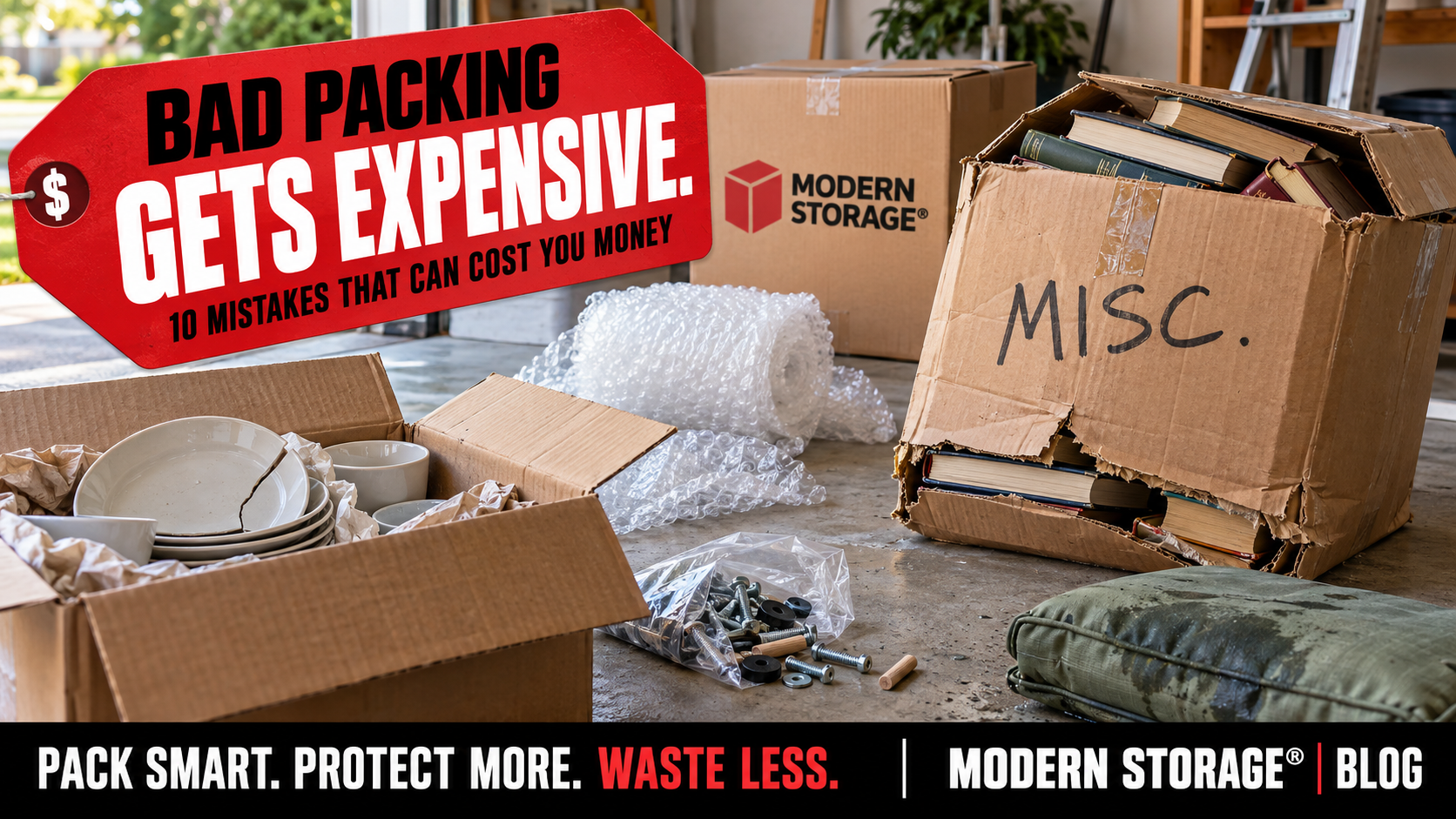
Moving is already expensive. The last thing you want is to accidentally make it more expensive because of the way you packed. Buying way too many supplies, throwing fragile items into oversized boxes, failing to label anything, damaging furniture, or renting more storage space than you actually need can all add unnecessary costs to a move.
Mistake #1: Buying Boxes Before You Know What You Need
Walking into a store and guessing how many boxes, rolls of tape, and packing supplies you need can leave you with too much of one thing and not enough of another.
Before buying supplies, go room by room and get a general idea of what needs to be packed. Separate items that need specialty protection from ordinary household belongings, and choose box sizes based on what will actually go inside.
Mistake #2: Putting Heavy Stuff in Huge Boxes
The giant box looks efficient—until you fill it with books and realize you've created something nobody wants to lift.
Use smaller sturdy boxes for heavier belongings and save larger boxes for lighter, bulkier items. An overloaded box can be difficult to move and may be more likely to tear or collapse.
Mistake #3: Skipping Protection for Fragile Items
Saving a few dollars on packing material doesn't feel like much of a bargain if you have to replace something that breaks.
Wrap fragile belongings appropriately, protect edges and surfaces, and fill open areas in boxes so contents don't move around excessively during transportation.
Don't assume blankets, towels, or clothing can safely protect every item. Use packing materials appropriate for the belongings you're moving.
Mistake #4: Packing Things Before They're Completely Dry
This is an easy mistake to make when you're rushing. You clean something before packing it, give it a quick wipe, put it into a container, and close the lid.
Make sure belongings are completely dry before they're packed or placed into storage. This is especially important for fabrics, outdoor equipment, coolers, furniture, appliances, and anything recently cleaned.
Mistake #5: Paying to Store Empty Space
Poor packing doesn't just waste room inside boxes. It can waste room inside the storage unit.
Oddly shaped piles, half-empty containers, furniture left assembled when it could reasonably be taken apart, and boxes that can't be stacked efficiently can make your belongings require more floor space than necessary.
- Use consistent box sizes when practical
- Fill boxes appropriately without overloading them
- Disassemble suitable furniture
- Use sturdy containers that can be safely stacked
- Keep similar items together
- Plan how larger furniture will fit before loading
- Use vertical space carefully when appropriate
Mistake #6: Not Taking Furniture Apart
A dining table takes up a lot more usable space when all four legs are still attached. The same can be true for bed frames, shelving, desks, and other furniture designed to be disassembled.
When manufacturer instructions allow it, carefully taking larger pieces apart can make them easier to transport and more space-efficient to store.
Mistake #7: Labeling Everything 'Misc.'
One miscellaneous box is understandable. Fifteen miscellaneous boxes are a future problem.
Write the room and a short description on each box. 'Kitchen — baking supplies' is much more useful than 'Kitchen,' and considerably more useful than 'Stuff.'
Good labels can also save money. If you know exactly where something is, you're less likely to buy another one because you can't find the original.
Mistake #8: Losing Hardware and Small Parts
Taking furniture apart saves space. Losing the screws required to put it back together creates an entirely new problem.
Place hardware in clearly labeled bags and keep those bags with the appropriate furniture whenever possible. Taking a quick photo before disassembling complicated pieces can also make reassembly easier.
Mistake #9: Packing Things You Should Have Gotten Rid Of
Packing is one of the best opportunities to decide what is actually worth moving.
If you already know you don't want something, paying for packing supplies, moving it, storing it, moving it again, and then getting rid of it doesn't make much sense.
Before packing, separate belongings into keep, donate, sell, and discard categories. The less unnecessary stuff you move, the less work you'll have later.
Mistake #10: Packing Without Thinking About Unpacking
Most people pack based on one goal: get everything into boxes. But eventually, those boxes have to be opened again.
Pack with the destination in mind. Keep belongings from the same room together, clearly mark essentials, and avoid burying anything you'll need immediately after the move.
If belongings are going into storage first, place items you're likely to need sooner where they can be reached without unloading the entire unit.
The Cheapest Packing Shortcut Isn't Always the Cheapest
There's nothing wrong with looking for ways to keep moving costs down. But the goal should be spending less overall—not simply spending less on packing day.
A box that collapses, furniture that gets scratched, an item you have to buy twice because you can't find it, or extra storage space you didn't really need can cost more than taking a little extra time to pack correctly in the first place.
Final Thoughts
Good packing isn't about making every box look perfect. It's about getting your belongings from Point A to Point B—and eventually back out of those boxes—in good condition and without unnecessary expense.
Plan before you pack, use the right supplies, protect what matters, label everything, and use your available space intentionally. If you need additional room during a move, renovation, or transition, Modern Storage® can help give your belongings a place to stay while you figure out what comes next.
What is the biggest mistake people make when packing?
Packing without a plan is one of the biggest problems. When belongings are randomly placed into boxes, people tend to waste space, lose track of items, overpack containers, and make unpacking much harder.
Is it bad to use large boxes for heavy items?
Yes. Large boxes filled with heavy belongings can become difficult to safely lift and are more likely to fail. Smaller sturdy boxes are generally a better choice for heavier items such as books.
Why shouldn't I store damp items?
Moisture trapped inside boxes, bins, furniture, fabrics, or equipment can create problems during storage. Make sure belongings are clean and completely dry before packing them away.
Do I really need to label every box?
Labeling takes a few extra minutes while packing and can save a lot of time later. Include both the room or category and a short description of the contents rather than simply writing "stuff" or "miscellaneous."
How can better packing reduce the amount of storage space I need?
Disassembling appropriate furniture, using consistent box sizes, filling containers efficiently, and stacking sturdy boxes strategically can reduce wasted space and help you make better use of your storage unit.
Storage options, unit types, packing needs, and amenities vary by Modern Storage® facility. Customers should follow manufacturer care instructions for individual belongings and contact their facility with questions about specific storage needs.