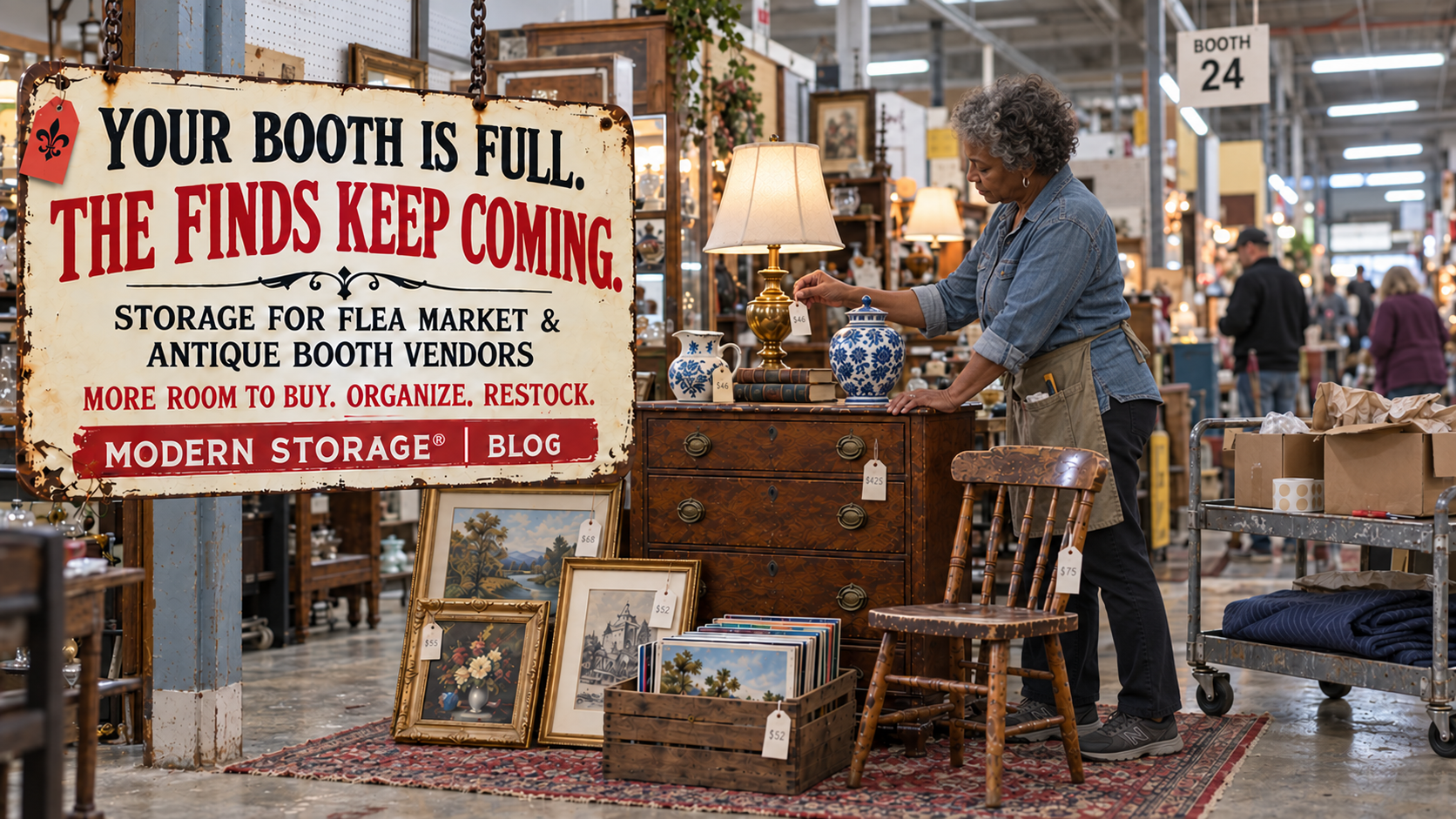
If you run a flea market or antique booth, you know the problem: the best time to buy inventory isn't always when you have room for it. You find a great piece at an estate sale. Someone offers you a collection at the right price. You spot something you know will sell—but your booth is already full. So the extra furniture goes into the garage. Boxes of smaller merchandise move into the spare bedroom. Seasonal displays end up in a closet. Before long, your home starts looking like the booth's unofficial back room. Self storage can give flea market vendors, antique dealers, vintage sellers, and resellers a dedicated place to organize extra inventory, display pieces, furniture, and booth supplies between restocks.
Your Booth Is Full. The Deals Keep Coming.
One of the challenges of selling vintage, antique, and secondhand merchandise is that you don't always control when great inventory becomes available.
The perfect dresser doesn't wait until you've sold the one currently sitting in your booth. Estate sales don't schedule themselves around your available shelf space. And sometimes a great collection becomes available all at once.
Having dedicated overflow space can give you somewhere to keep appropriate inventory until there's room to move it onto the sales floor.
Your Garage Doesn't Have to Be the Back Room
For many vendors, the business starts spilling into the house almost immediately. Furniture lands in the garage. Smaller finds get stacked in the spare room. Empty display pieces end up wherever they'll fit.
That may work when you have a handful of extra pieces. Once your inventory grows, however, mixing business merchandise with household belongings can make both harder to manage.
Create an Overflow Inventory System
Think of storage as the behind-the-scenes inventory area for your booth. The booth holds what's currently for sale, while storage holds pieces waiting for their turn.
That can include recently purchased inventory, seasonal merchandise, furniture waiting for booth space, extra display pieces, and items you're temporarily rotating off the sales floor.
Organize Inventory by Category
The more varied your inventory becomes, the more important organization becomes. A storage unit full of unlabeled boxes may technically hold everything, but it won't make restocking the booth much easier.
- Furniture
- Wall décor and artwork
- Lamps and lighting
- Vintage kitchenware
- Books and records
- Collectibles
- Seasonal merchandise
- Textiles and linens
- Signs
- Small decorative pieces
- Display fixtures
- Shopping bags and business supplies
Choose categories that reflect how you actually shop and restock your booth. If you specialize in a particular style or era, organizing around those categories may make even more sense.
Make Booth Restocking Easier
When something sells, you want to be able to replace it without digging through piles of merchandise to figure out what you have.
Keep inventory you're likely to move into the booth soon in an accessible area. Larger pieces that are waiting for floor space can have their own section, while smaller merchandise can be organized in clearly labeled containers.
Give Furniture and Larger Pieces Room
Furniture is one of the fastest ways for resale inventory to overwhelm a home. One chair becomes three chairs. Then there's a dresser, a side table, two lamps, and the cabinet you bought because the price was too good to leave behind.
Dedicated storage can provide room for appropriate larger pieces while you wait for space to open in your booth.
Before storing furniture, make sure pieces are clean and completely dry. Protect surfaces appropriately and avoid placing heavy items where they could damage more delicate inventory.
Rotate Seasonal Merchandise
Seasonal merchandise can be valuable booth inventory without needing prime booth space all year.
Holiday décor, seasonal signs, themed displays, and other time-specific pieces can stay organized until their selling season approaches. As the season changes, bring relevant inventory forward and move off-season merchandise back.
This gives you the flexibility to refresh your booth without trying to display everything you own at once.
Keep Track of What You Actually Own
Resellers tend to remember the exciting pieces. It's the six boxes of smaller merchandise that become harder to track.
A simple inventory system doesn't need to be complicated. Even photographing your merchandise and noting where it's stored can make a big difference.
- Photograph larger inventory pieces
- Assign numbers or SKUs when useful
- Label every box or tote
- Record purchase cost if you track margins
- Note whether an item is in the booth or in storage
- Group similar merchandise together
- Update your records when something sells
- Periodically review inventory that has been stored for a long time
Consider Climate Control for Certain Inventory
Depending on the type of merchandise you sell, climate-controlled storage may be worth considering for certain inventory.
A more consistent environment can be helpful for certain wooden furniture, books, artwork, photographs, textiles, collectibles, and other materials that may be sensitive to significant changes in temperature or humidity.
Climate control does not guarantee against damage. Merchandise should still be clean, completely dry, appropriately packed, and stored according to any applicable care recommendations.
Make Room for the Find You Haven't Found Yet
For antique dealers and flea market vendors, inventory is rarely predictable. You may go looking for one small piece and come home with an entire collection.
Having some breathing room in your inventory system means a great find doesn't automatically create a storage crisis at home.
Your Booth Can Be the Showroom, Not the Stockroom
Booth space is valuable. Filling every inch with every piece you own isn't always the best way to present merchandise.
Keeping overflow inventory somewhere else gives you more freedom to create intentional displays, rotate merchandise, and change the look of your booth without needing to get rid of inventory simply because it doesn't fit today.
Final Thoughts
Flea market and antique booth businesses have a unique inventory problem: you often have to buy the good stuff when you find it, not when you happen to have room for it.
Whether you're storing vintage furniture waiting for booth space, seasonal décor, collectibles, display fixtures, or the estate-sale haul you absolutely could not leave behind, Modern Storage® can give your resale inventory a dedicated place between restocks.
Why would a flea market or antique booth vendor need storage?
Booth space is limited, but inventory often isn't. Storage can provide additional room for merchandise waiting to be displayed, seasonal pieces, booth fixtures, furniture, and supplies without filling garages or spare rooms.
How should I organize antique booth inventory in storage?
Organize inventory by category, booth location, season, or restocking priority. Label containers clearly and keep an inventory list or photographs so you know what you have without searching through every box.
Is climate-controlled storage worth considering for antiques?
It may be worth considering for certain furniture, artwork, books, textiles, collectibles, and other materials that can be sensitive to significant temperature or humidity changes. Climate control provides a more consistent environment but does not guarantee against damage.
Can storage help me rotate merchandise in my booth?
Yes. Keeping extra inventory organized makes it easier to swap out merchandise, refresh displays, introduce seasonal pieces, and replace sold items without keeping everything at the booth at once.
Is self storage useful for resellers who sell in more than one place?
Yes. Vendors selling through antique booths, flea markets, pop-up events, and online platforms may benefit from having one central location for appropriate overflow inventory and display supplies.
Storage options, unit types, amenities, and access features vary by Modern Storage® facility. Business customers should review their rental agreement and contact their facility with questions about specific inventory or storage needs.