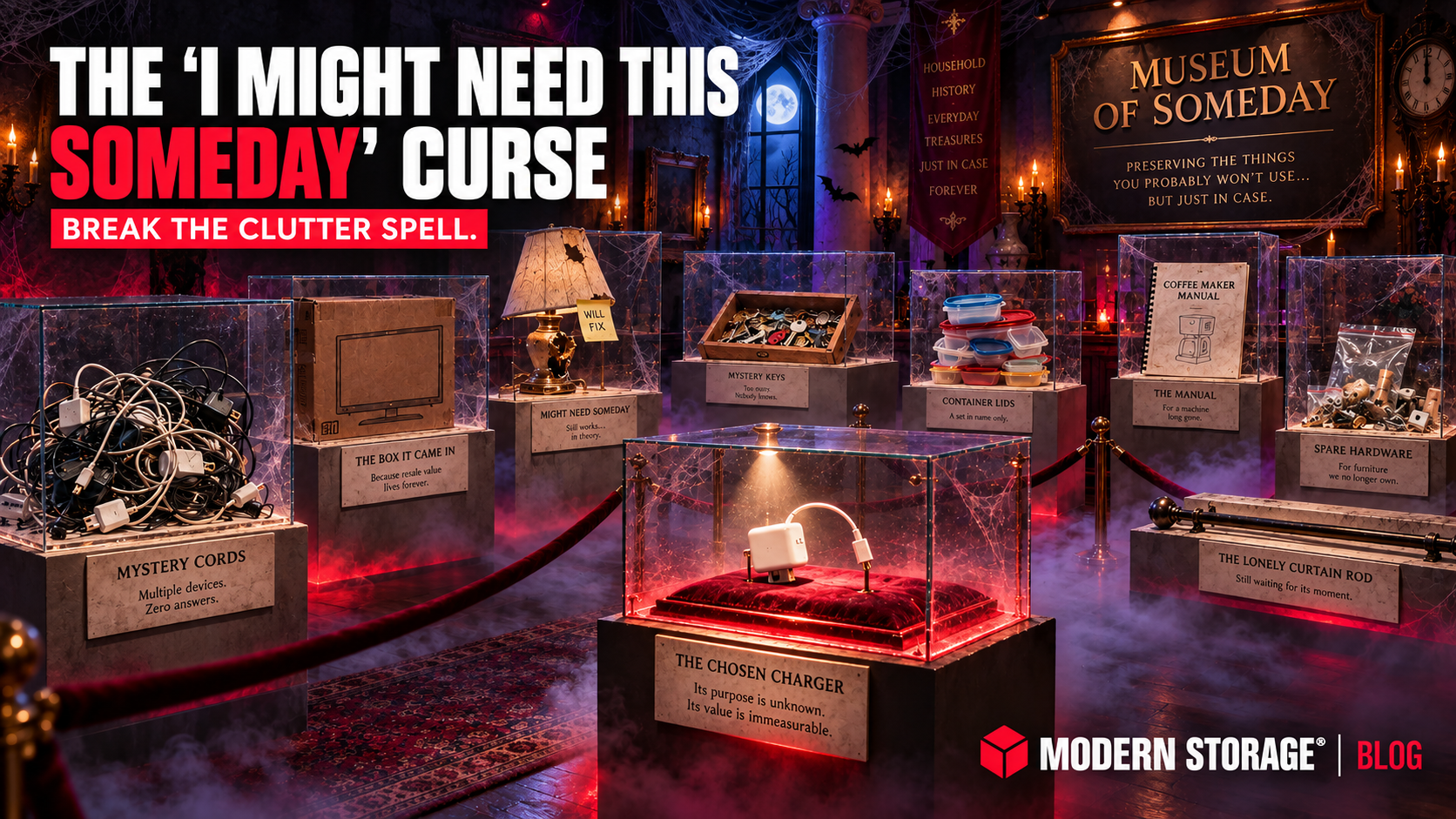
It starts innocently enough. You find an old phone charger in a drawer. You don't know what it belongs to. You haven't used it in years. You aren't even sure you still own the device it charges. But then the thought creeps in: "I might need this someday." And just like that, the charger goes right back into the drawer. Before long, your closets are full, your garage is crowded, and your spare bedroom has become a museum of things that might be useful in a hypothetical future. This is the "I Might Need This Someday" Curse.
The Curse Begins With One Little Word: Someday
Someday is a powerful word.
Someday you'll fix that lamp. Someday you'll use those leftover tiles. Someday you'll need the instruction manual for a coffee maker you threw away three years ago.
And because someday doesn't have an expiration date, these things can sit untouched for years.
The problem isn't keeping a few extras. It's when the possibility of needing something becomes the only reason you're keeping it.
The Haunted Museum of Things We Keep
Every household has at least a few exhibits in its personal Museum of Someday.
- A drawer full of chargers for devices nobody owns anymore
- Empty product boxes saved in case they're needed
- Old furniture waiting for a makeover that never happens
- Extra kitchen gadgets that haven't been used in years
- Mystery hardware left over from assembling furniture
- Clothes that haven't fit or been worn in ages
- Half-finished craft projects
- Random cords that apparently belong to something important
- Duplicate household items kept just in case
Individually, these things seem harmless. Collectively, they can take over drawers, closets, cabinets, spare rooms, and garages.
Why We Can't Seem to Let Go
Sometimes the hardest part of decluttering has nothing to do with the object itself.
Maybe you spent good money on it. Maybe someone gave it to you. Maybe you remember a time when it was useful. Or maybe you simply don't want to experience the frustration of throwing something away and needing it two weeks later.
Those feelings are understandable. But keeping an item doesn't recover the money you spent on it, and saving everything doesn't guarantee you'll be prepared for every future situation.
Sometimes the cost of keeping something is the space, time, and energy it takes away from your everyday life.
The Five-Question Curse Breaker
Before returning another mystery item to the drawer, ask yourself five questions.
- 1. When was the last time I actually used this?
- 2. Does it still work or serve a useful purpose?
- 3. Do I have a realistic plan to use it again?
- 4. Would it be difficult or expensive to replace?
- 5. Is it worth the space it's taking up?
Not every item needs to pass all five questions. But if you're struggling to find a single good reason to keep something, that may tell you what you need to know.
The Difference Between Keeping and Hoarding Space
There's nothing wrong with keeping useful extras, sentimental belongings, or items you plan to use again.
But every item you keep requires space. And when storage areas become so crowded that you can't comfortably use them, the belongings are starting to control the space instead of the other way around.
You don't necessarily need to own less of everything. You need to be more intentional about what deserves a place in your home.
When Sentimental Items Are Actually Worth Keeping
Not everything has to be useful to deserve a place in your life.
Family photographs, childhood keepsakes, inherited furniture, meaningful gifts, and other sentimental belongings may be worth preserving even if you rarely use them.
The important distinction is whether you're keeping something because it matters to you or simply because you feel guilty about letting it go.
Meaningful belongings deserve thoughtful care, not a forgotten corner beneath a pile of unrelated clutter.
The Someday Box Challenge
Here's a simple way to confront the curse without trying to reorganize your entire house in one afternoon.
Choose one drawer, shelf, or small closet section. Pull out everything you've been keeping because you might need it someday.
Sort the items into three groups.
- Keep: Items you use, value, or have a realistic plan for
- Let Go: Items that are broken, obsolete, unnecessary, or no longer useful
- Decide Later: Items you're genuinely uncertain about
Place the Decide Later items in one clearly labeled box with a review date. When that date arrives, look through the contents again and make a decision.
The goal is to make progress without forcing rushed decisions about belongings you genuinely care about.
Don't Let Storage Become a Second Junk Drawer
Here's where we have to be fair: renting a storage unit doesn't automatically solve clutter.
If you pack every broken appliance, mystery cable, and forgotten purchase into boxes without deciding whether you want them, you've mostly relocated the problem.
Self storage is most useful when you know what you're keeping and why.
That might include furniture you're saving for a future home, seasonal decorations, family keepsakes, or belongings that are temporarily displaced during a renovation.
Give the Things Worth Keeping a Real Home
Once you've separated the clutter from the belongings you genuinely want to keep, you can make better decisions about where everything belongs.
Everyday essentials should stay accessible at home. Occasionally used belongings can be organized in designated household storage areas. Items you value but don't need regularly may be good candidates for self storage.
- Furniture being saved for a future move
- Seasonal decorations and household accessories
- Family keepsakes and memory boxes
- Properly packed seasonal clothing
- Extra household furniture
- Recreational equipment
- Belongings needed for an upcoming life transition
Modern Storage® offers a variety of unit sizes and month-to-month rentals, making it easier to choose space based on your actual needs rather than committing to more than you require.
How to Keep the Curse From Returning
Breaking the curse once is helpful. Keeping it from returning is where the real magic happens.
Before saving something new, decide whether you genuinely have a use for it. Give belongings designated places, avoid collecting unnecessary duplicates, and periodically revisit the items you've been keeping for later.
And remember: just because something could potentially be useful someday doesn't mean you have to keep it forever.
Final Thoughts
The 'I Might Need This Someday' Curse has haunted closets, garages, junk drawers, and spare bedrooms for generations.
But breaking it doesn't mean throwing away everything you own. It means making thoughtful decisions about what deserves your space.
Keep what matters. Let go of what doesn't. And for the belongings worth saving but not keeping underfoot, Modern Storage® can help you find a place for them.
As for that drawer full of mystery chargers? We can't promise any of them will ever come back to life.
Why is it so hard to get rid of things I might need someday?
People often keep belongings because they remember what they paid for them, worry about needing them later, associate them with memories, or dislike the idea of wasting something potentially useful.
How do I decide whether something is worth keeping?
Consider whether you use it, need it, love it, or have a realistic plan for it. If an item has been sitting untouched for years and has no meaningful purpose or sentimental value, it may be time to let it go.
Should I get a storage unit instead of decluttering?
Self storage works best as part of a thoughtful organization plan, not as a replacement for deciding what you actually want to keep. Declutter first, then consider storage for belongings that are useful, valuable, seasonal, or sentimental but don't need to remain at home.
What items are worth keeping in storage?
Seasonal decorations, keepsakes, extra furniture, properly packed clothing, recreational equipment, and belongings needed for future life transitions may be good candidates, depending on their condition and your plans.
How can I stop clutter from coming back?
Create designated spaces for belongings, periodically review what you own, and avoid keeping items solely because they might become useful in an unlikely future situation.
Storage options, unit types, amenities, and availability vary by Modern Storage® facility. Items should be properly cleaned, dried, packed, and stored according to manufacturer recommendations. Customers should review their rental agreement for specific storage requirements.