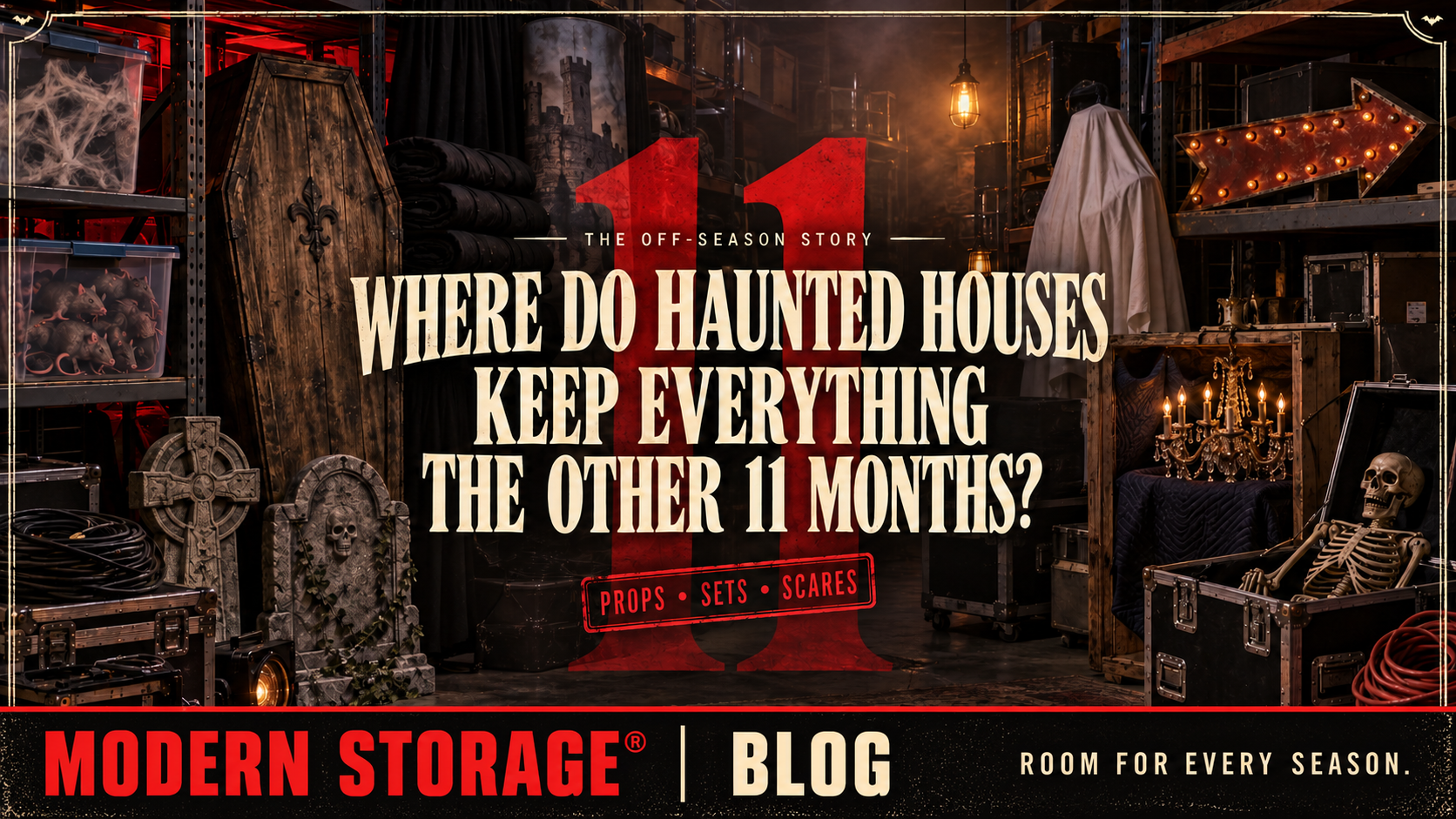
For a few weeks every fall, haunted houses seemingly appear out of nowhere. Suddenly there are graveyards, skeletons, creepy dolls, costumes, giant spiders, fake coffins, signs, lighting, and enough fake cobwebs to cover an entire building. Then November 1 arrives. Where does all that stuff go? Running a seasonal attraction creates a storage problem most visitors probably never think about. A haunted house might operate for only part of the year, but its props, costumes, decorations, sets, signage, and permitted equipment still need a home during the other 11 months. That's where organized business storage can become part of the behind-the-scenes operation.
The Haunted House Closes. The Stuff Doesn't Disappear.
Visitors see the finished attraction: dim hallways, elaborate scenes, actors in costume, creepy props, lighting, sound effects, and decorations everywhere. What they don't see is the enormous amount of inventory required to build that experience.
When Halloween is over, all of it has to be taken down, sorted, packed, and kept somewhere until the next season. For a seasonal business, that can create a surprisingly complicated storage challenge.
What Exactly Has to Be Stored?
Think about everything you might encounter during a walk through a haunted attraction. Almost every reusable item needs somewhere to go after the season ends.
- Skeletons and artificial bones
- Masks and costumes
- Fake tombstones and coffins
- Artificial pumpkins and seasonal décor
- Signs and banners
- Tables, shelving, and display pieces
- Artificial plants, vines, and cobweb décor
- Reusable set pieces
- Lighting and permitted electronic equipment
- Sound equipment
- Ticketing and event supplies
- Tools and permitted setup equipment
The Skeleton Problem: Big Props Take Up Big Space
A six-foot skeleton is funny in October. In February, it's just a six-foot object that needs somewhere to go. Haunted attractions often accumulate large props and set pieces that are expensive to replace but difficult to keep around year-round.
When possible, safely disassemble large reusable pieces according to their instructions. Keep hardware with the corresponding prop, label every component, and photograph complicated setups before taking them apart.
Costumes, Masks and the Creepy Little Details
The smaller pieces can become just as difficult to manage. Costumes, masks, wigs, accessories, fabric décor, and makeup-area supplies can quickly turn into a pile of mystery boxes if they're packed away without a system.
Clean and completely dry reusable fabrics according to their care instructions before storage. Keep costume pieces together, label containers by character or scene, and avoid placing heavy items on top of pieces that could lose their shape.
Organize by Scene, Not Just by Item
Imagine opening the unit next September and finding 75 containers labeled simply 'Halloween.' That's technically accurate. It's also not very helpful.
For attractions with multiple rooms or themes, consider organizing storage around the way the attraction is actually built. Keep the graveyard pieces together, group the creepy-carnival props, and store the haunted-hospital items in their own clearly identified section.
- Label containers by scene or attraction area
- Number large props and their matching components
- Photograph completed scenes before teardown
- Keep assembly hardware with the corresponding prop
- Create zones inside the storage unit
- Leave frequently accessed equipment near the front
Consider Climate Control for Sensitive Items
Some haunted-house inventory may be more sensitive to significant changes in temperature and humidity than others. Certain costumes, fabrics, electronics, detailed decorations, and specialty props may benefit from a more consistent storage environment.
Climate-controlled storage can provide that more consistent environment while also keeping seasonal business inventory together in one organized space. Availability and unit types vary by Modern Storage® facility.
Create an Inventory Before Everyone Forgets
The best time to document everything is during teardown—not 10 months later when no one remembers whether the giant spider was thrown away or stored behind the coffins.
Create a simple inventory with photos, quantities, container numbers, condition notes, and locations inside the unit. This can also help the business identify damaged pieces that need to be repaired or replaced before opening night.
Storage Isn't Just for Haunted Houses
The same problem affects plenty of seasonal businesses and organizations. Holiday decorators, event companies, festivals, community organizations, seasonal vendors, and other businesses may use certain equipment for only a few weeks or months each year.
Instead of allowing seasonal inventory to consume valuable office, retail, or workspace year-round, self storage can provide a dedicated place for permitted items until they're needed again.
Final Thoughts
So, where do haunted houses keep everything the other 11 months? The monsters may disappear, but behind the scenes, somebody still has to organize the skeletons, pack the costumes, label the coffins, and find a home for that giant spider. For haunted attractions and other seasonal businesses, Modern Storage® can provide flexible space for permitted props, décor, equipment, and supplies until it's time to bring everything back from the dead next season.
Where do haunted houses store their props after Halloween?
It depends on the attraction. Some have permanent warehouses or dedicated buildings, while others may use off-site business storage for permitted props, costumes, decorations, signage, and equipment during the off-season.
Can haunted-house props be kept in a storage unit?
Many ordinary props, decorations, costumes, signs, and set pieces may be appropriate for storage, but specialty equipment and materials should always be checked against the facility's rules and rental agreement.
How should Halloween props be organized for storage?
Sort props by room, scene, theme, or type. Clearly label containers, photograph larger pieces, keep related components together, and create an inventory so the setup crew knows exactly what is available next season.
Is climate-controlled storage useful for costumes and props?
It may be worth considering for items sensitive to major temperature or humidity changes, including certain fabrics, electronics, detailed props, and décor. Climate-controlled storage provides a more consistent environment but does not guarantee against damage.
Is self storage useful for other seasonal businesses?
Yes. Event companies, seasonal vendors, decorators, community organizations, and other businesses with inventory that is only needed during certain parts of the year may benefit from flexible business storage.
Storage of business inventory, equipment, props, and other items is subject to facility rules and rental terms. Certain materials may be prohibited. Contact Modern Storage® before storing specialty equipment or materials if you are unsure whether they are permitted.